
McMinnville Historical Directory Collections
McMinnville's strongest verified directory shelf is at the Ruth Stoller Research Library of the Yamhill County History Museum. The library lists City and Telephone Directories, but its public holdings page does not publish a complete publisher-by-publisher run, a reverse-directory sequence, or a full shelf inventory. That makes the collection real and useful, while leaving exact volume selection to an appointment or research-team inquiry. The two dated citations below establish regional formats that included McMinnville or Yamhill County, not proof that a particular repository holds every edition.
| Collection | Years | Where Held | Access Route |
|---|---|---|---|
| City and Telephone Directories | Years not enumerated online | Ruth Stoller Research Library | Research-team appointment; ask for city, publisher, and year. |
| McMinnville–Newberg City Directory, including Yamhill County | 1972 citation verified | Oregon SHPO citation | Locate a holding; the cited volume is not a verified museum shelf item. |
| Heald Ownership Directory Northwest Oregon | 1915 citation verified | Oregon SHPO citation | Locate a holding; it includes Yamhill County in a regional ownership format. |
| Census indexes | 1850–1910 | Ruth Stoller Research Library | Use as an index route alongside the directory question. |
| Sanborn map sheets | 1884, 1889, 1892, 1902 | City historical-materials resources; 1889 also at LOC | Building and street context, not a list of occupants. |
The published research did not verify missing-year patterns, publication suspensions, or a final local printing year. Treat those as shelf questions. Record the title, edition year, publisher, call number, and the presence or absence of a numerical section before treating a volume as evidence for an address.
For a view of the collection page that supports this access route, see the Yamhill County History Museum Research Library.
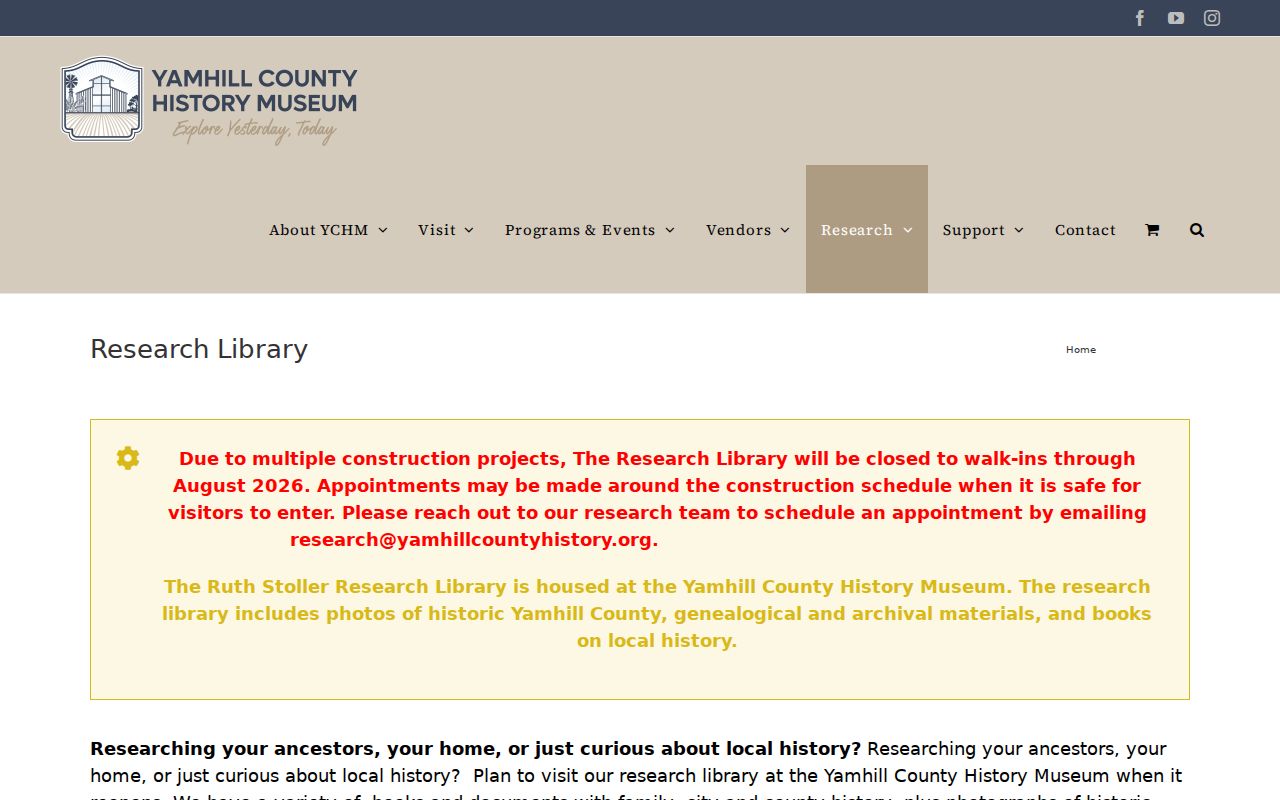
The museum page identifies the directory shelf among broader local-history holdings, so it is the right place to confirm an edition rather than infer a run from a citation.
McMinnville Directory Access in 2026
Access conditions deserve as much attention as the title on the spine. As inspected on August 31, 2026, the Ruth Stoller Research Library was closed to walk-ins through August because of construction projects. Its published alternative was to contact the research team to arrange an appointment around construction conditions. That is a temporary access condition, not a claim that the library has closed permanently. Contact the research team to ask whether a specific title, edition, or companion index is available.
The co-located Yamhill County Genealogical Society adds another local route. Its volunteers have created searchable and non-searchable indexes from applications, scrapbooks, cemetery permits, jail registers, and historical documents, and the society offers a research-copy request path. An index hit is a lead to the original rather than a substitute for it. This is especially useful when a directory name points toward a cemetery, family, or local-document file.
See the Yamhill County Genealogical Society indexes before requesting copies.
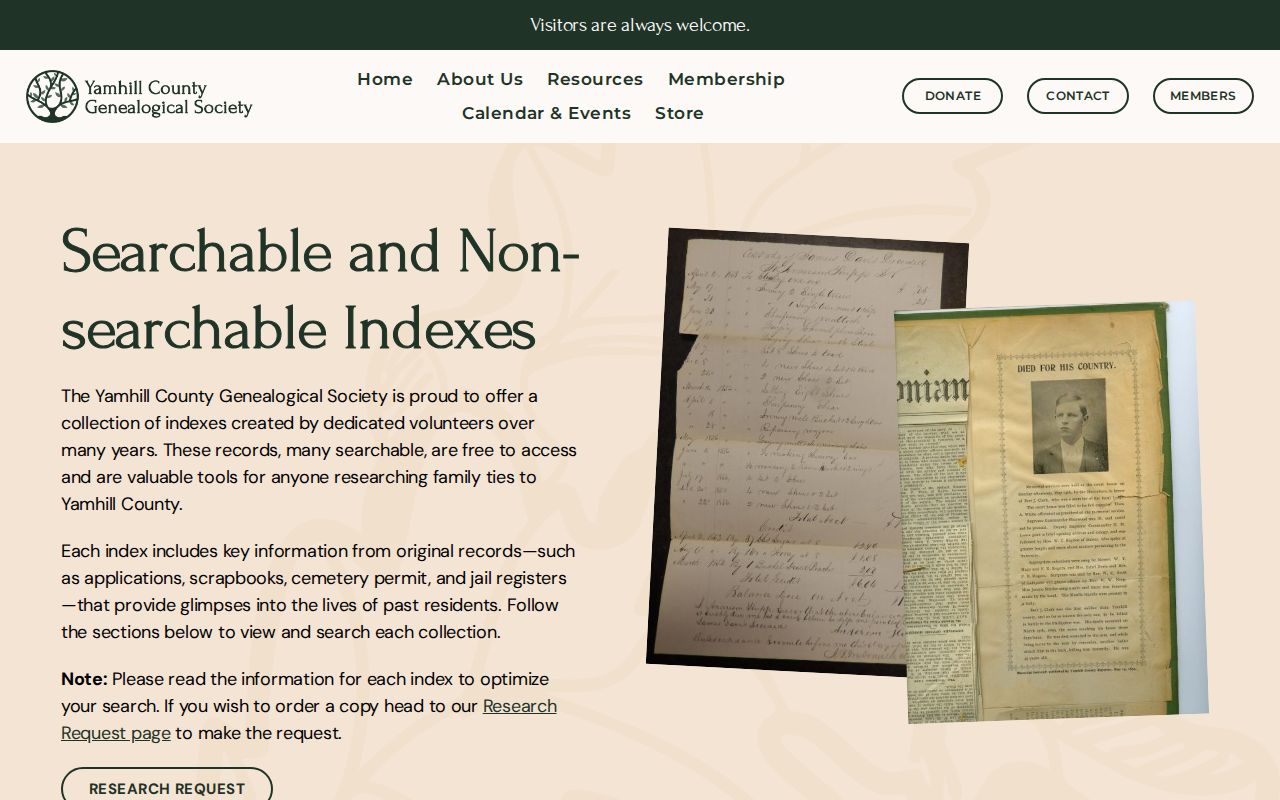
The society's index page is a practical companion to the directory shelf because it describes both searchable material and the copy-request fallback.
Note: Exact directory years, publishers, and reverse sections must be confirmed from the selected volume or a research-team response.
McMinnville City Directory Companion Files
A directory entry becomes more useful when it is paired with a record that answers a different question. The museum lists family-surname files, obituaries, school histories and student records, photographs, cemetery records, property title abstracts, donation-land-claim records, oral histories, and city or county clipping and document files. It also lists marriage certificates for 1884–1920, a probate index for 1845–1900, death certificates for 1903–1958, and birth certificates for 1903–1912. These are historical collections, not a current-resident directory.
For example, a directory can place a named person at an address in one edition. A title abstract can point to a property history, an obituary can provide a date or relative, and a probate index can identify an estate trail. None of those sources proves every person who lived at the address. Keep the date and source role beside every finding so a move, business address, or mailing address is not mistaken for a household fact.
The City's historical documents and research materials provide the map and preservation side of a house-history question.
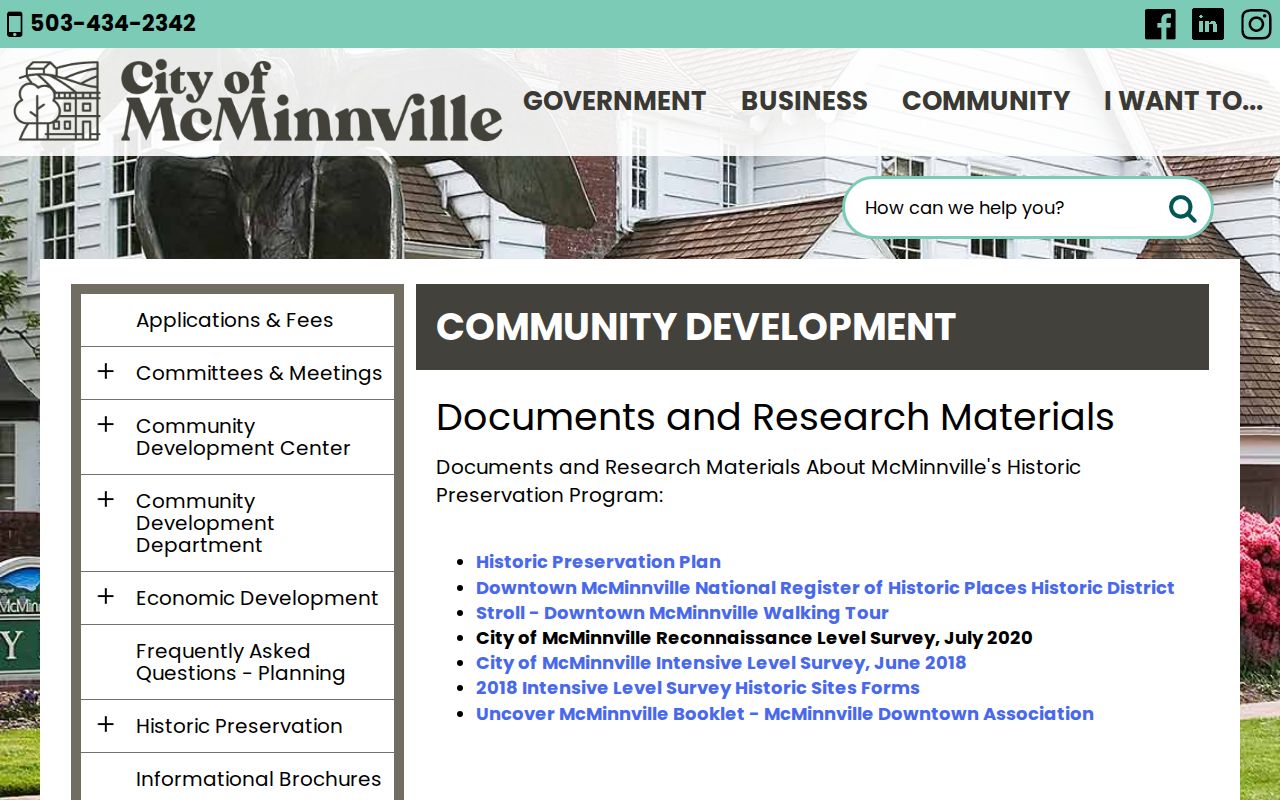
Those City materials can help test a building's date and address form before a directory listing is read as a continuous residence.
Reading a McMinnville City Directory
No official or institutional web source in this research displayed a McMinnville directory entry or its abbreviation key. It would be unsafe to assign local meanings to symbols such as r, h, bds, or a widow notation without seeing the volume. At the appointment, photograph or transcribe the title page and key first. Then inspect the entry headings and the street or numerical section before drawing conclusions about address, spouse, occupation, telephone, or owner notation.
| Exact title and publisher | Establishes the edition, citation, and actual collection run. |
|---|---|
| Edition year and call number | Sets the date of the observation and supports a repeat search. |
| Alphabetical headings and symbols | Shows whether the book prints address, spouse, occupation, telephone, or other fields. |
| Street or numerical heading | Shows whether the volume has a usable address-order section. |
| Abbreviation key | Prevents a guessed reading of status marks, business abbreviations, or street prefixes. |
| Adjacent editions | Lets a reader compare the appearance, change, or disappearance of a name. |
- Criss-cross directory
- An address-order section, if a specific volume has one, that is consulted by street rather than surname.
- Householder index
- An index arranged around a household or address label; its exact coverage must be checked in the volume.
- Abbreviation key
- The volume's own guide to shortened terms and symbols, which should be captured before interpreting an entry.
For a current address-keyed record trail after an old listing is identified, use the McMinnville street directory rather than treating the historical volume as a present-day locator.
McMinnville City Directory Years
Only two directory-era citations are verified in the research. A State Historic Preservation Office record cites the 1915 Heald Map & Directory Company, Ownership Directory Northwest Oregon, which covered Yamhill County among several northwest Oregon counties. It also cites a 1972 McMinnville–Newberg, Oregon City Directory: Including Yamhill County, published by Johnson Publishing Company. These are useful dated waypoints, but they do not establish the first or last local directory, a complete publisher sequence, or a museum holding.
- 1851–1859: the State Archives identifies early Yamhill court journals, assessment material, wills, and marriage records.
- 1884, 1889, 1892, 1902: City-linked Sanborn sheets provide building-era context.
- 1915: a verified regional ownership-directory citation includes Yamhill County.
- 1972: a verified McMinnville–Newberg city-directory citation includes Yamhill County.
The Oregon State Archives Yamhill territorial records guide documents the earliest record groups that help fill periods before a confirmed directory volume.
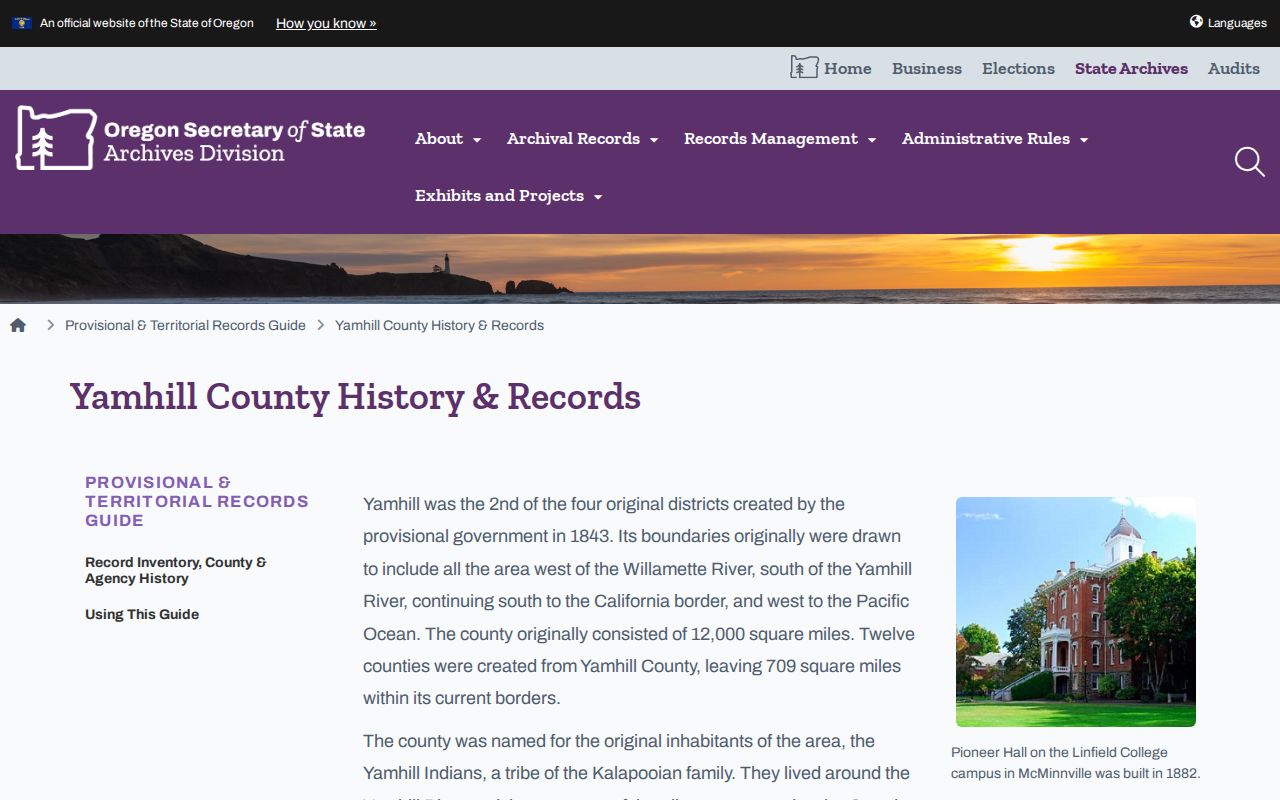
The territorial guide supports a dated switch to early tax, court, marriage, will, or naturalization records when the directory shelf has not yet been confirmed.
McMinnville Early Records Before Directories
Yamhill County's record history makes a useful bridge for a nineteenth-century household question. The State Archives identifies assessment rolls for 1852–1859, declarations of intention and an index for 1853–1859, will records for 1854–1859, justice-court journals for 1851–1859, and marriage records for 1857–1859. These record groups can supply names, valuations, former nationalities, witnesses, spouses, and parties, but the guide does not promise that each is a searchable online database.
The 2026 State Archives notice also opened another annual vital-record cohort: 1925 births and 1975 deaths, marriages, and divorce returns. The Archives offers historical material through original records, microfilm, or publications, with free viewing of many microfilms and publications in its Reference Room, paid research support, and Yamhill links in the Oregon Historical Records Index. County records can still remain with the county, so a result should lead back to the appropriate custodian.
See the Oregon State Archives vital-record guide for the historical access routes and record-group limits.
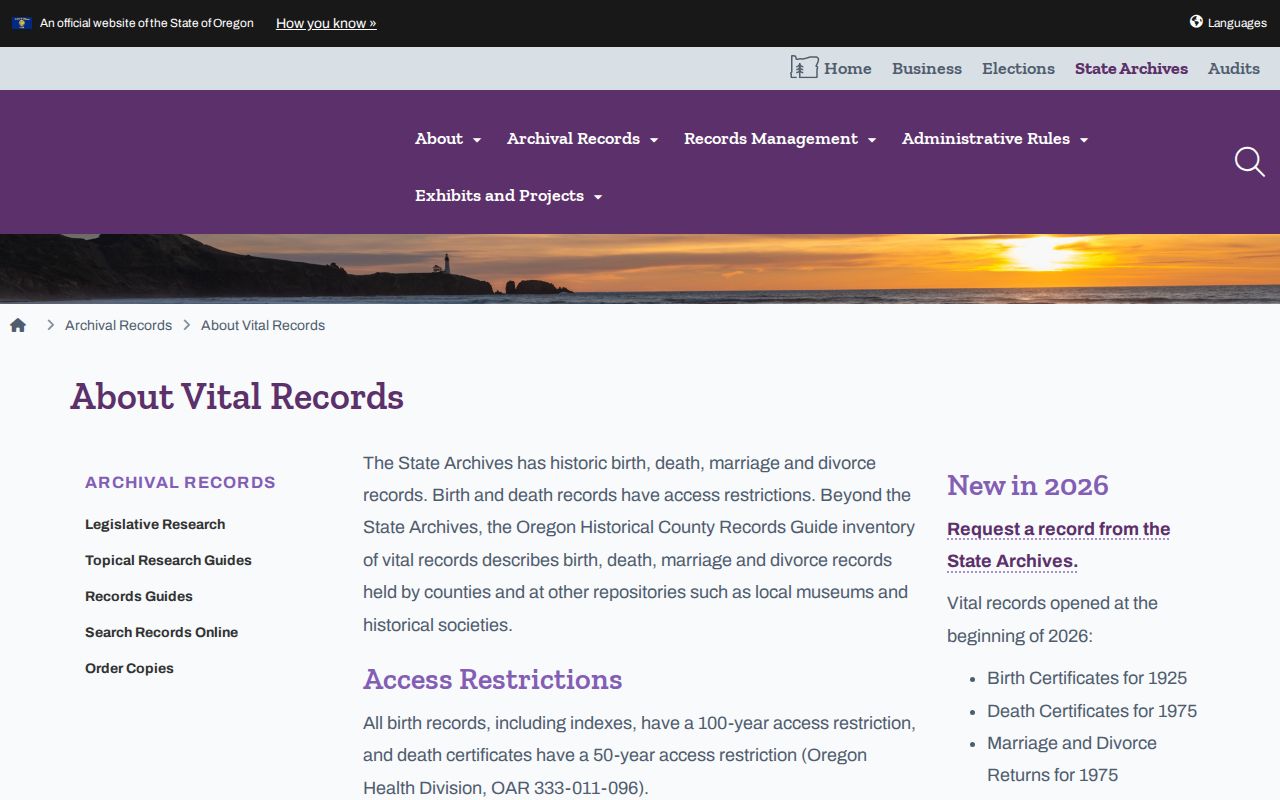
The archival route adds dated evidence around a directory entry without turning an index or certificate listing into a complete household roster.
Note: The research did not document a courthouse fire, a records reconstruction project, or a local directory printing chronology.
McMinnville Directories and Sanborn Maps
Maps can check the place before a name trail is stretched too far. McMinnville historical-materials resources link Sanborn sheets for 1884, 1889, 1892, and 1902, and the Library of Congress makes the January 1889 four-sheet map set available. Sanborn maps show building footprint, use, and construction clues. They do not identify residents. If a directory seems to show a gap, the map can help test whether a structure had been built, whether the street form differs, or whether a volume's coverage is incomplete.
The City Historic Resources Inventory gives another place-specific route by organizing entries around site address, historic name when identified, and resource number. It was compiled in 1983/84 and has since been updated through the City preservation process. Later surveys in 2018 and 2020 can consolidate a building's historic name, address, resource number, construction-era discussion, and citations. Archaeological details are separately protected, so the public inventory is not a complete list of heritage resources.
Keep directional prefixes such as NE, NW, SE, and SW exactly as printed in the source. McMinnville's published street names show why dropping a prefix can send a directory search to the wrong place.
Trace a McMinnville Directory Trail
A sound city-directory trail is a dated sequence, not a single match. Start with the year nearest the known address or family event. Ask the Ruth Stoller Research Library to identify the actual volume and any adjacent editions. Copy the printed name, street form, and every abbreviation exactly. Then pair the directory date with the museum's 1850–1910 census indexes, historical newspapers, obituary files, title abstracts, and probate index as the question requires. The point is to explain a transition with several sources, not to force all records to agree.
- Find the first confirmed appearance in an identified directory edition.
- Compare adjacent editions and record the address string exactly as printed.
- Check the volume's own numerical section only after confirming that it exists.
- Pair the directory date with the relevant museum census index or archival record group.
- Use an obituary, cemetery, probate, or title-abstract lead to test a move, death, or estate transition.
A disappearance can reflect a move, death, a different spelling, an unlisted telephone, a business address, or a volume's coverage. It is not proof by itself. For legal facts such as title or a vital event, obtain the underlying official or archival record after the directory provides a lead.